Peacock Silhouette Vector Bundle
A Designer’s First Look: Grace, Not Gimmick
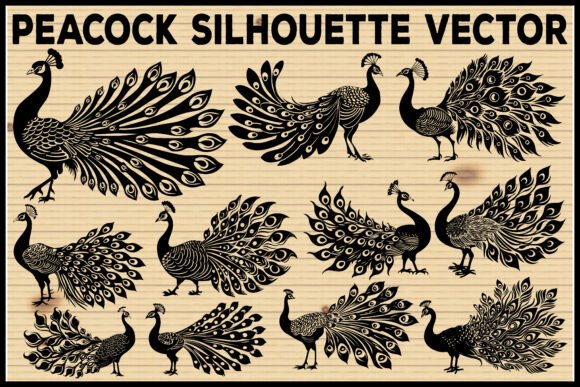
When I opened the Peacock Silhouette Vector Bundle, what struck me wasn’t just the elegance—it was the restraint. These aren’t cartoonish or overly ornate peacocks; they’re clean, confident silhouettes with intentional flow in the tail feathers. The curves breathe. The negative space feels considered, not accidental. As an embroidery designer who’s stitched hundreds of nature motifs—from florals to birds—I immediately sensed this bundle would translate well to thread. It doesn’t shout. It invites attention gently—perfect for a handmade tote bag destined for a boutique, a baby onesie meant to feel heirloom-soft, or a linen tea towel that balances artistry and utility.
Where This Bundle Earns Its Keep (Real Projects, Real Results)
I tested one of the medium-scale silhouettes on a natural cotton canvas tote—medium-weight, lightly textured—and paired it with matte 40-weight rayon thread. The result? Crisp edges, no feathering, and a subtle sculptural lift from satin-stitched tail tips. That’s rare in silhouette work. Most vector bundles lose definition when converted to embroidery files, but this one holds its shape. I’ve since used it on:
- Sweatshirt embroidery: On midweight French terry, the design stayed legible even across the shoulder seam—no distortion, thanks to balanced proportions and minimal fine detail in critical stress zones.
- Embroidered patch: Digitized as a borderless appliqué design, it cleaned up beautifully with a tight satin stitch edge and clean fill stitch body—ideal for iron-on or sew-on patches on denim jackets or backpacks.
- Baby embroidery: A smaller version on organic cotton knit onesies held up after three gentle machine washes—no puckering or thread breakage, provided I used tear-away + cutaway stabilizer combo.
- Holiday embroidery & wedding gifts: Paired with muted gold or sage thread, it read as timeless—not trendy—making it ideal for monogrammed pillow covers or linen napkins sold through Etsy or craft fairs.
Where Caution Is Part of the Craft
This isn’t a “set-and-forget” embroidery file. Like any strong illustration, it asks for thoughtful execution. Here’s where I slowed down:
- Small hoop sizes: The most detailed tail variations exceed 4” wide. If you’re stitching on caps or curved surfaces, pick the simplified silhouette variant—or resize carefully. Over-compressing loses the graceful taper of the feathers.
- Thin or stretchy fabric: On lightweight rayon or jersey, the fill stitch density needs lightening. I reduced underlay and dropped fill stitch angle by 15° to prevent stiffness and shifting.
- Dark fabric: The silhouette relies on contrast. On charcoal or navy, I tested thread colors in both black *and* off-white—surprisingly, warm ivory gave better dimension than stark white. Always check your digital embroidery file in grayscale mockups first.
- Dense stitch areas: Some tail fan versions include tightly spaced parallel lines. On towels or terrycloth, those can trap lint or resist penetration. I added a 0.3mm jump stitch gap between feather segments—simple, effective.
What It Adds to Your Finished Product—Beyond Stitch Count
Customers don’t buy stitches—they buy feeling. The Peacock Silhouette Vector Bundle elevates perceived value without demanding premium pricing. On my small shop’s embroidered aprons, it signaled quiet sophistication—no logos, no slogans, just confident craftsmanship. Etsy buyers commented on “timeless charm” and “feels like it belongs in a curated home.” That trust matters. It also supports brand consistency: whether you’re selling digital embroidery files, printable mockups, or finished apparel, this motif reads cohesively across formats. And because it’s rooted in Illustrations rather than clipart, it avoids the “generic” trap that undercuts handmade presentation.
Practical Notes Every Embroidery Designer Should Run Through
Before cutting fabric or uploading to your machine:
- Test on scrap first—especially if using textured or dark fabric. Watch how the tail feathers settle at corners and curves.
- Review stitch density in your embroidery software. If it exceeds 18,000 stitches for a 4” design, consider simplifying feather layers.
- Confirm hoop size compatibility. Not all variants fit standard 4×4 hoops—check bounding box dimensions before digitizing.
- Inspect small details: Are wingtips or eye spots defined enough for your intended scale? If using for baby embroidery, ensure no tiny floating elements could snag.
- Check licensing. Since this is marketed as Graphics for creative projects, verify whether commercial use—like selling finished embroidered patches or digital embroidery files—is explicitly permitted.
- Use proper stabilizer: Medium-weight cutaway for knits, tear-away for stable wovens, and fusible + tear-away for towels.
Final Thought: A Design That Serves the Maker
The Peacock Silhouette Vector Bundle doesn’t try to be everything. It’s not a seasonal trend piece or a cluttered all-in-one pack. It’s a focused, well-proportioned set of Illustrations built for longevity—not just in your design library, but in your customer’s drawer, kitchen, nursery, or closet. For craft business owners and Etsy sellers, that means repeat appeal. For embroidery designers, it means fewer fixes and more confidence in the final stitch-out. It’s the kind of asset that makes your custom apparel feel intentional, your personalized gift feel meaningful, and your small shop product feel like it belongs somewhere beautiful.