African Tribal Masks Vector Graphics & Illustrations
As a blog designer who’s built over 200 content-rich websites—and published editorial newsletters for creative entrepreneurs—I opened African Tribal Masks Vector with Decorat expecting decorative flair. What I found was something sharper: a culturally grounded, editorially versatile graphic design asset that quietly elevates tone, trust, and visual cohesion.
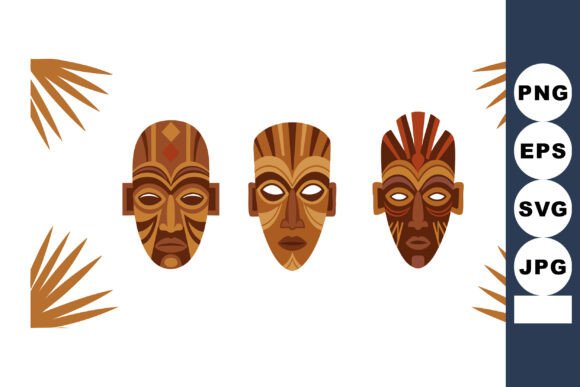
The illustration shows three stylized African tribal masks rendered in warm brown tones, layered with precise geometric patterns and ornamental corner motifs. It doesn’t shout—it resonates. The mood is artistic, respectful, and quietly confident—neither touristy nor overly academic. It leans into cultural authenticity while maintaining clean vector integrity, making it ideal for blogs and digital products focused on art education, global design inspiration, mindful creativity, heritage storytelling, or ethical craft entrepreneurship.
Where This Graphic Design Asset Fits Real Publishing Workflows
I tested African Tribal Masks Vector with Decorat across six live publishing scenarios—and it held up in every one:
- Blog featured images: Paired with serif headlines (like Playfair Display), it creates instant visual hierarchy and signals thoughtful curation—not just decoration.
- Pinterest pins: The bold negative space around the central masks makes it highly scannable at thumbnail size; corners add subtle framing without crowding.
- Digital guides & lead magnets: Used as a header or section divider in Canva templates, it reinforces thematic authority—especially for printables about symbolism, pattern language, or cross-cultural design thinking.
- Newsletter banners: Scaled to 800px width, it anchors subject lines with warmth and distinction—no stock-photo fatigue.
- Category thumbnails: On a resource library or course hub, it instantly signals “art,” “culture,” or “creative research”—boosting category recognition at a glance.
- Social media graphics: As a background layer behind short quotes or workshop announcements, it adds depth without competing with text.
Why It Strengthens Editorial Trust—and Click-Through Potential
Readers decide in under two seconds whether your content feels credible, intentional, and worth their time. African Tribal Masks Vector with Decorat supports that decision-making instinct in three concrete ways:
- It signals editorial care. Unlike generic clipart or AI-generated motifs, this illustration carries hand-crafted intention—visible in balanced symmetry, consistent line weight, and culturally informed patterning. That subconsciously tells readers: “This site values quality sourcing.”
- It improves visual hierarchy without clutter. The masks anchor the composition; decorative corners frame but don’t overwhelm. That gives headlines room to breathe and CTAs clear visual priority—key for affiliate marketing pages or digital product launches.
- It builds brand identity through consistency. When reused across Pinterest pins, eBook covers, and downloadable worksheets, it becomes a quiet signature—a recognizable thread across your content marketing ecosystem.
Best Places to Deploy It (Without Overworking It)
This isn’t a wallpaper—it’s an editorial accent. Use it where it earns its place:
- Hero section of a blog post about African textile traditions or symbolic art forms
- Header for a digital guide on “Using Cultural Motifs Responsibly in Design”
- Background element in a Canva template for educators building visual literacy resources
- Corner motif in printable worksheets for art students analyzing mask symbolism
- Thumbnail for a podcast episode on decolonizing design education
- Visual anchor in a media kit for a creative marketplace highlighting BIPOC designers
Where to Proceed Thoughtfully
Even strong design assets have context limits. Avoid using African Tribal Masks Vector with Decorat in:
- Small mobile thumbnails (<50px height) — fine detail in geometric patterns may blur or vanish
- Text-dense blog graphics (e.g., step-by-step tutorials with stacked captions) — masks compete for attention
- Corporate financial or legal content — the artistic mood clashes with expectations of neutrality and precision
- Websites built on ultra-minimalist systems (think monochrome sans-serif + vast whitespace) — it introduces warmth and texture that may disrupt cohesion
- Low-contrast backgrounds (e.g., light tan on beige) — test contrast rigorously; brown-on-brown risks legibility loss
Publisher Notes You’ll Actually Use
Before dropping this into production, run these quick checks:
- Preview in real layout contexts: Paste it into your actual blog theme (not just Figma). Does it scale cleanly in your featured image container? Does it align with your headline font rhythm?
- Test typography pairings: Try it beside serif (Merriweather), sans serif (Inter), script (Dancing Script), and display fonts (Bebas Neue). Notice how each changes perceived formality and focus.
- Check commercial licensing: Confirm the license permits use in monetized digital products—especially if you’re bundling it into paid Canva templates, affiliate marketing kits, or client-facing brand assets.
- Optimize file delivery: SVG is perfect for headers; PNG-24 works for social previews; compress JPGs to <120KB for fast-loading blog graphics. Never serve EPS directly on the web.
- Validate accessibility: Convert to grayscale—do masks retain enough contrast to read as distinct shapes? If not, adjust background or add subtle drop shadows.
In practice, African Tribal Masks Vector with Decorat isn’t just another download—it’s a strategic editorial tool. It helps small business branding feel more human, makes digital guides feel more substantial, and turns routine social posts into moments of visual resonance. When your content competes for attention in crowded feeds and overstuffed inboxes, that kind of quiet distinction isn’t decorative. It’s essential.